Insights
When a Blackout Becomes a Narrative: Finding Cognitive Advantage in the Comments
When a blackout becomes a narrative, the comments reveal how crisis stories evolve, shape perception, and create cognitive advantage for decision-makers.
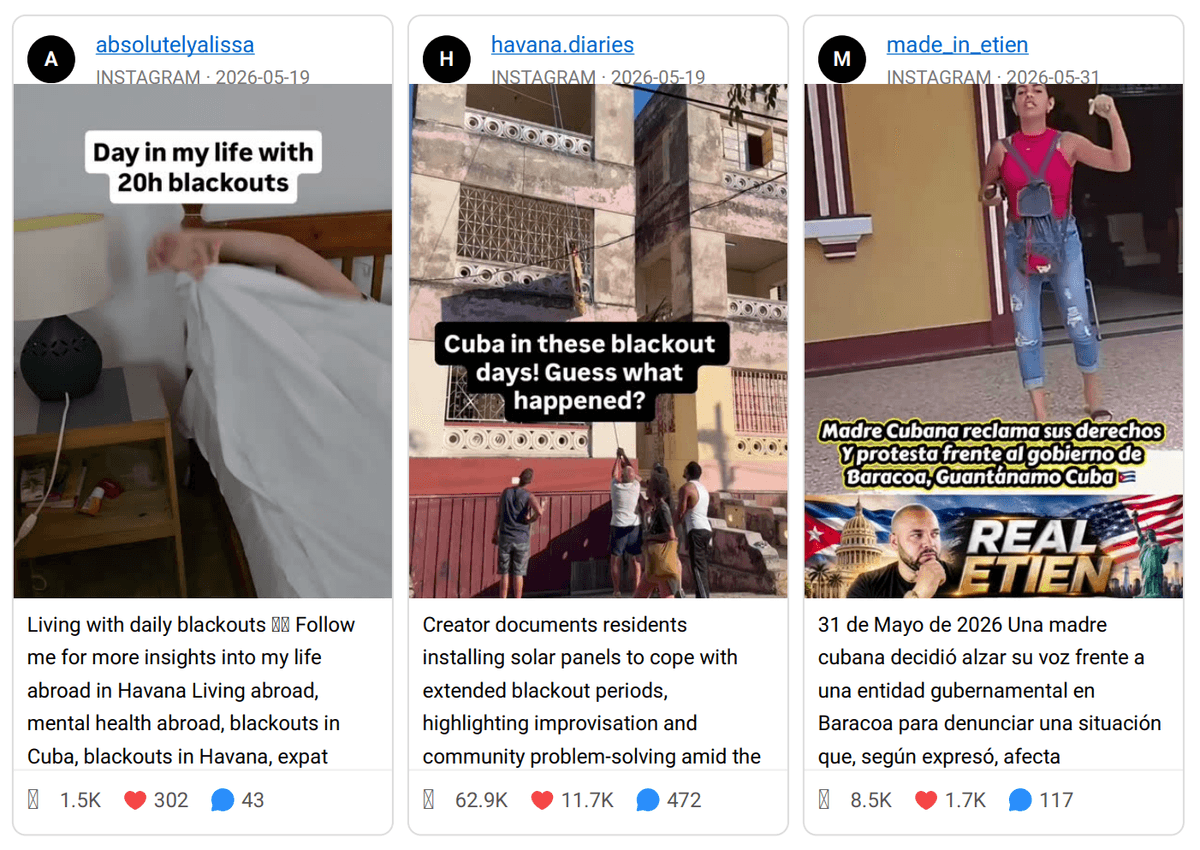
At first glance, it looked like a blackout story.
A photo of a spoiled fridge. A short video of someone working through a narrow window of electricity. A neighbor showing solar panels as a way to keep life moving. A mother in Baracoa, Cuba publicly asking how she is supposed to care for her children when the power keeps failing.
On their own, each post felt like a single moment. Together, they revealed something larger: a population trying to survive a crisis that had become part of everyday life.
This story percolates across social media.
Economic Hardship and Daily Survival on the Island
But the fuller story lives in the comments.
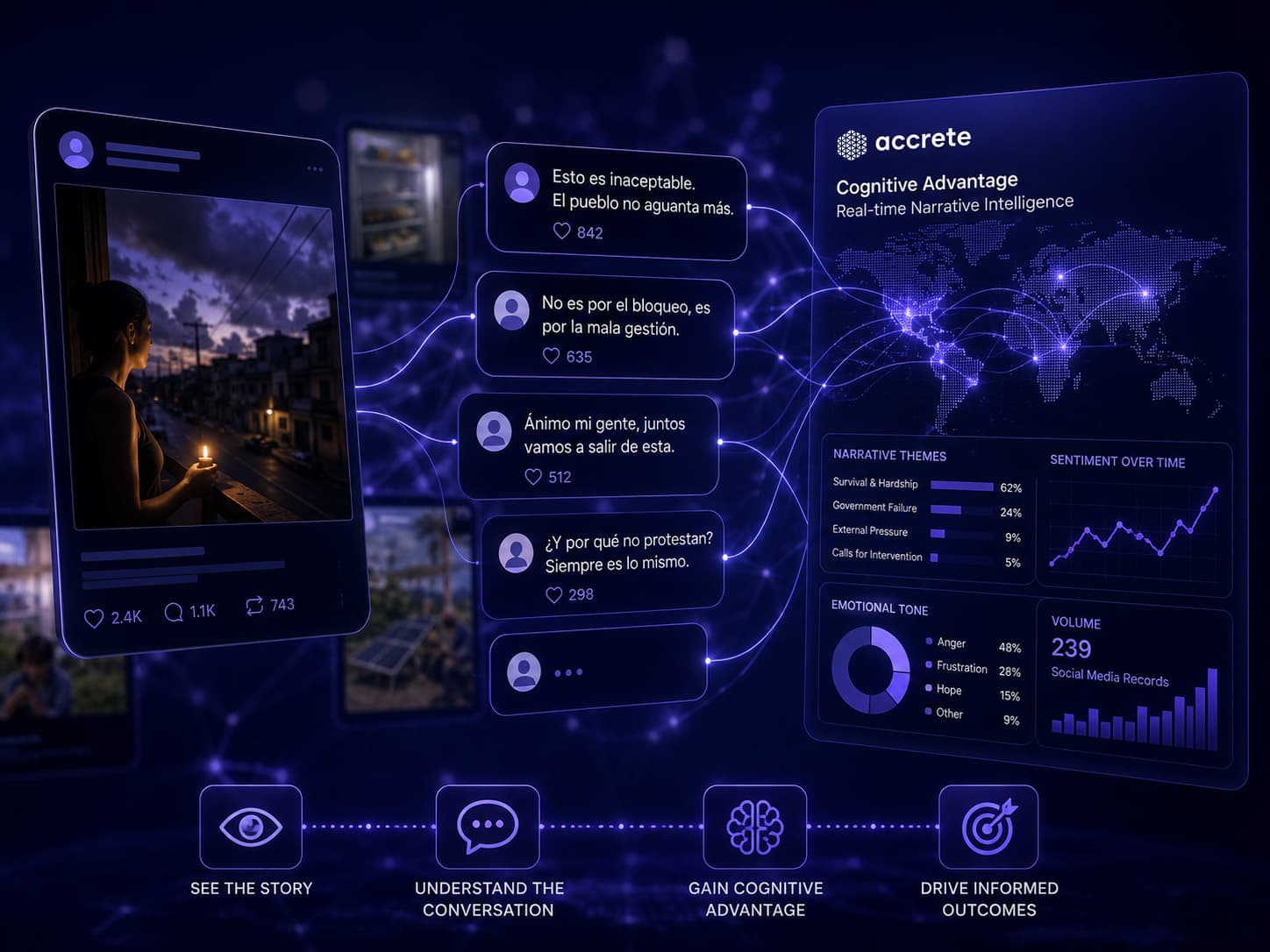
The comments provide a clearer picture of what people are experiencing, what they are feeling, and how they are explaining the crisis around them. Understanding this context is critical to understanding a story’s impact. The real value is not just in seeing that hardship exists. It is in understanding how that hardship is being framed, where emotional pressure is building, and which narratives are gaining traction or falling apart.
Establishing cognitive advantage starts here.
In an influence campaign, the images do the first work. They evoke emotion immediately. A blackout is no longer an abstract infrastructure problem when someone is filming a dark house, an empty refrigerator, or a neighborhood improvising around the failure of basic services. The visual story creates urgency before the audience even reaches the caption. It pulls people into the reality of the moment.
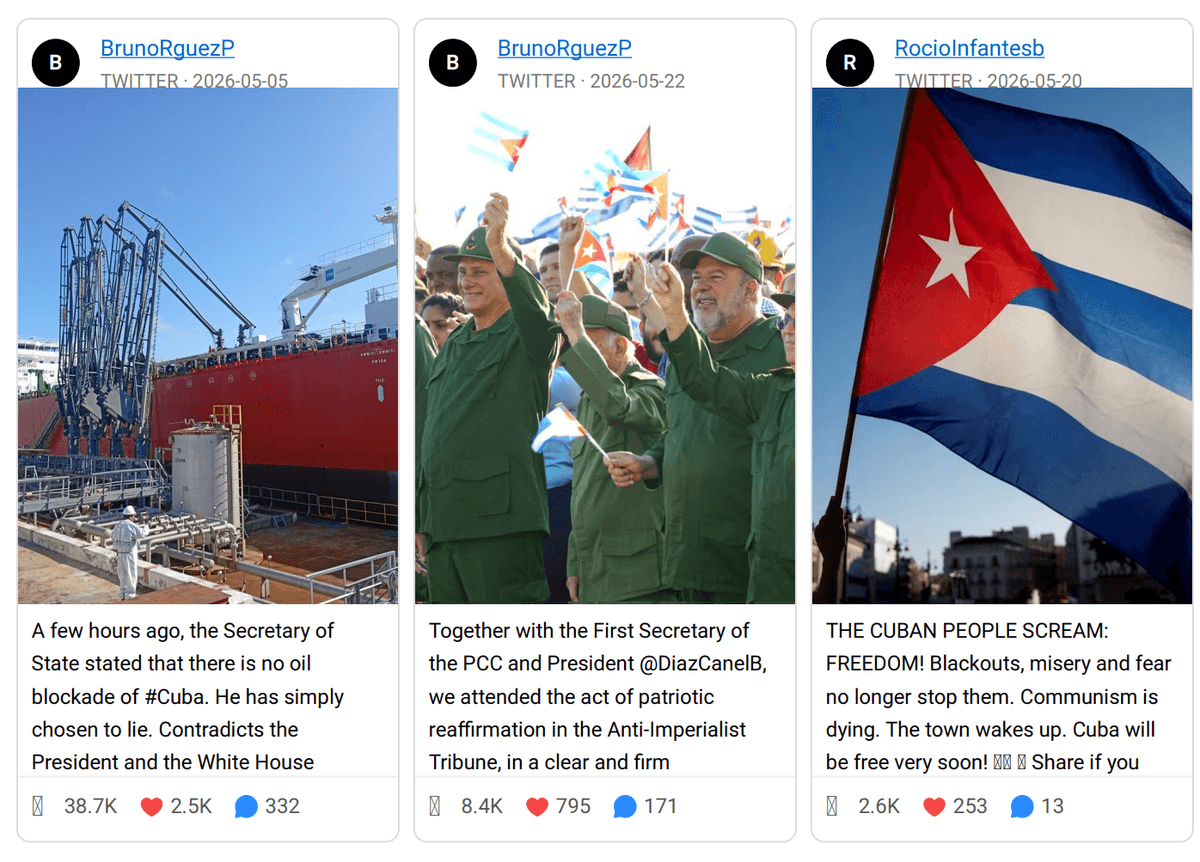
Competing Narratives of Responsibility: Government Mismanagement vs. U.S. Sanctions
Then the comments take over.
That is where the story is ignited, reinforced, or challenged. Some replies validate the image and confirm the experience it portrays. Others sharpen the emotion into anger, blame, or solidarity. Some push back entirely, rejecting the frame and forcing a different interpretation. The comments reveal whether the audience is aligning around the image or resisting what it seems to say.
This moment is where key information surfaces and informs decision-making.
Information discovery does not happen without technology like Argus for Cognitive Advantage.
AI enables context visibility by pulling together disparate data, and is especially effective with social media content. For leaders, this means seeing how a crisis is being understood in real time. They can identify when a hardship narrative is becoming a blame narrative, when a humanitarian story is shifting into a political one, and when audience reaction is fragmented enough to create reputational or policy risk.
Diaspora Influencers, U.S. Policy Signals, and Calls for Intervention
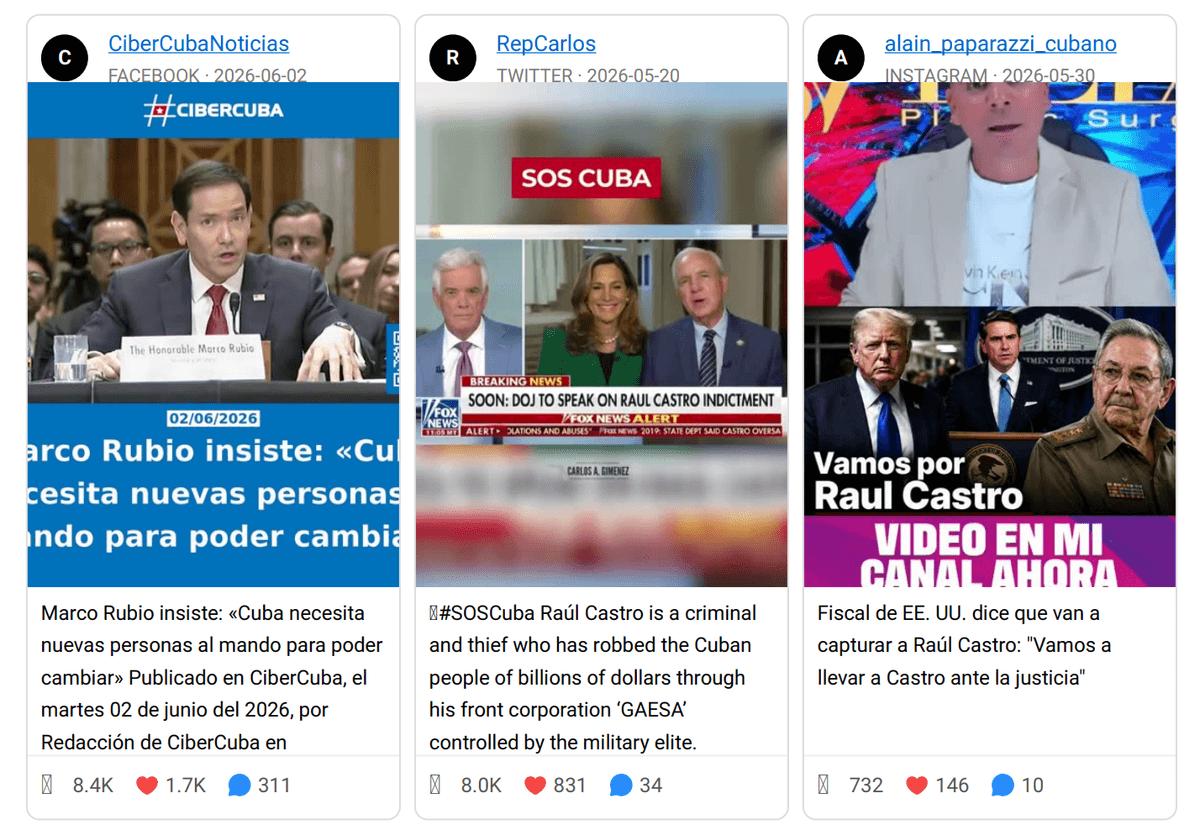
In the Cuba case described above, the Argus for Cognitive Advantage report analyzed 239 social media records from April 22–June 4, 2026 across Facebook, Twitter/X, Instagram, TikTok, and Reddit, showing that while the crisis is widely shared, its meaning is not. On the island, the story centers on survival and distrust; in official messaging, it is framed around external pressure and sanctions; and among people outside Cuba, it often becomes a call for intervention, accountability, or rescue. By examining current conditions, responsibility narratives, and attitudes toward possible U.S. intervention, Argus for Cognitive Advantage reveals where these stories overlap, where they split, and where comments show uncertainty rather than consensus.
It supports earlier awareness of narrative shifts. It helps distinguish between emotional reaction and durable sentiment. It shows when a post is not just being seen, but being interpreted, contested, and turned into something larger. It gives decision-makers a more reliable view of how people are making sense of events before those interpretations harden into louder public debate.
Political Repression, International Advocacy, and Links to Broader Crisis Narratives
| Topic Label | Start At | End At | Post Count | View Count | Platforms |
|---|---|---|---|---|---|
| Prisoner Abuse and International Calls for Justice | Thu, 14 May 2026 00:00:00 GMT | Mon, 01 Jun 2026 00:00:00 GMT | 78 | 661,640 | Facebook; Twitter; Reddit; Instagram |
| Protests in La Habana Reflect Economic and Human Rights Concerns | Fri, 08 May 2026 00:00:00 GMT | Sun, 31 May 2026 00:00:00 GMT | 22 | 65,325 | |
| Havana Blackouts Reveal Cuba's Energy Challenges | Tue, 05 May 2026 00:00:00 GMT | Mon, 01 Jun 2026 00:00:00 GMT | 59 | 556,250 | Twitter; Facebook; TikTok; Reddit; Instagram |
| Cuba Faces Economic Hardships and Social Disparities | Tue, 26 May 2026 00:00:00 GMT | Tue, 02 Jun 2026 00:00:00 GMT | 86 | 531,118 | Twitter; Facebook; Reddit; Instagram |
Ultimately, information operations practitioners need technology like Argus to show how a story is moving, evolving, and shaping perception so they can determine their outcomes.